Features
Molyneaux Faces the Name She Was Given on ‘Nemesis’
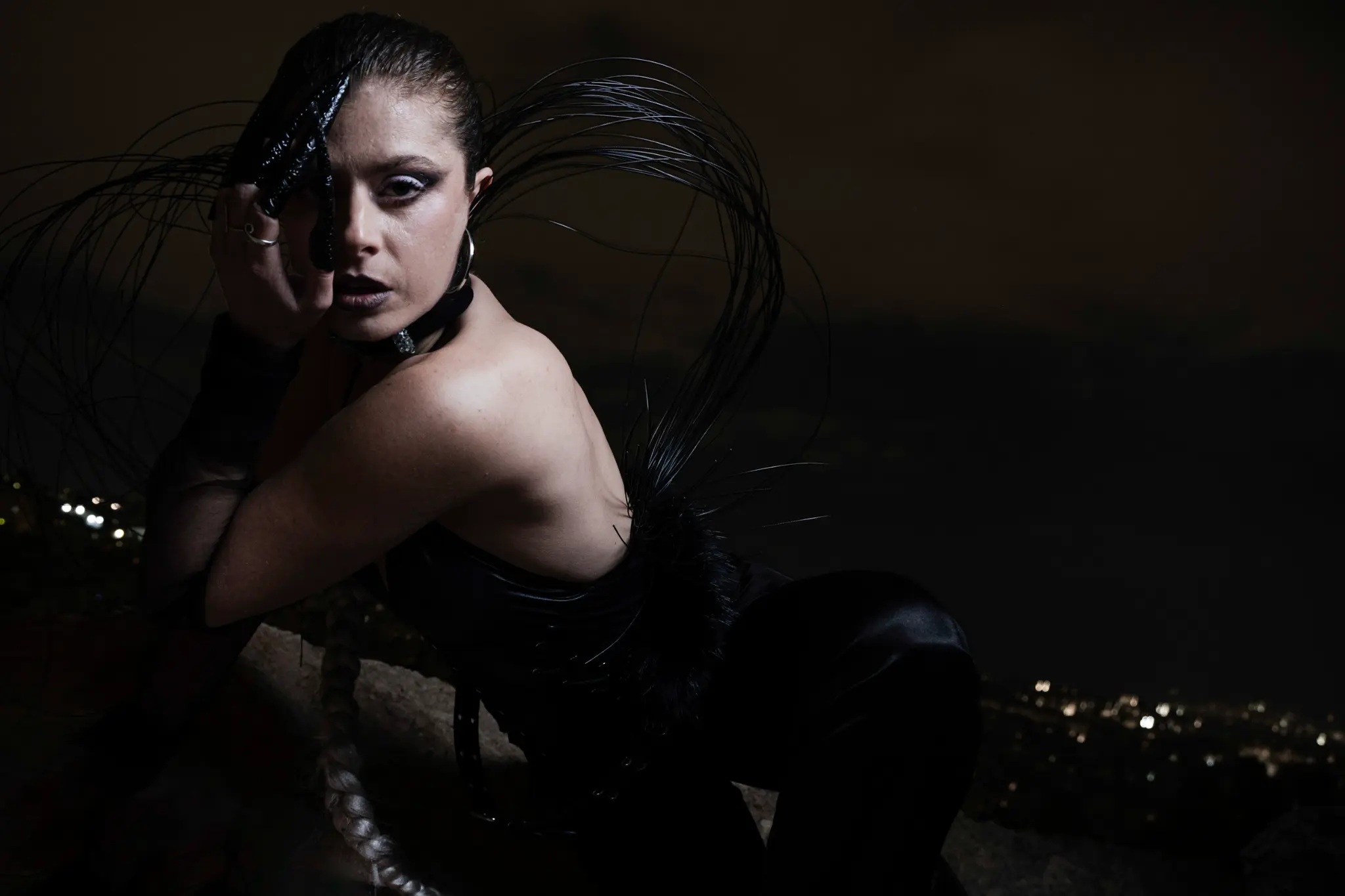
In ‘Nemesis’, Saint Catherine does not arrive as a source of comfort. She appears as an assigned identity, pure and obedient, attached to a name chosen long before its owner could decide what it meant. Molyneaux takes that image and places it inside a track about the difficult distance between the person someone was expected to become and the person they have built instead.
Released today, 30 September, ‘Nemesis’ begins a new chapter for the Greek artist following three formative years in Berlin. The song centres on Katherine, Molyneaux’s baptismal name, and the expectations carried by growing up in a conservative Christian Orthodox environment. Its conflict is not framed as a clean escape from the past. The former self remains present, visiting in dreams and following the narrator into a life that has already moved beyond it.
That tension gives the title its meaning. The nemesis is not simply another person or an external enemy. It is the identity imposed through family, religion and heteronormative convention, returning as an internal voice even after its authority has been rejected. The track’s language moves between refusal and ritual. Statements of self-possession sit beside repeated invocations of Saint Catherine, as though the ceremony that named her continues to play somewhere in the background.
Molyneaux builds the production around that uneasy repetition. A fast electronic pulse gives the song forward motion, but its structure repeatedly interrupts any sense of easy release. Synth textures press against deconstructed club rhythms, while the vocal shifts between intimacy and distance. Near the middle, the arrangement thins and darkens before rebuilding around the recurring Saint Catherine refrain. The repetition starts to feel less like prayer than conditioning, a phrase learned early enough to survive inside the body.
The references named by Molyneaux include Kedr Livanskiy, In Atlas, Aïsha Devi and Emika. They help locate ‘Nemesis’ somewhere between synthwave, experimental electronics and avant-pop, but the track is most convincing when it avoids settling fully into any one of them. Its pop instincts remain visible in the vocal refrain, while the production keeps roughening the edges around it. The result is accessible enough to hold onto, but too unsettled to become comforting.
This balance marks a development from Sorrow, Molyneaux’s 2023 debut EP released through Just Gazing Records. That earlier project already dealt with rejection, fractured memory and self-redefinition through trip-hop, synth-pop and darkwave references. ‘Nemesis’ retains the melancholy but makes the confrontation more direct. Instead of circling private pain, it identifies one of the systems that helped produce it.
Molyneaux wrote, recorded and produced the track in her Kreuzberg studio. Christos Bekiris handled the mix, with mastering by Iraklis Vlachakis. Keeping the writing and production in the same hands matters here because the relationship between the words and the arrangement is unusually close. The moments of compression, repetition and release do not merely decorate the subject. They reproduce the sensation of trying to move forward while an inherited identity keeps interrupting.
The artwork, created and edited by Panos Tsomakos with graphic design by Contino, extends the same idea visually. A blurred figure stands in darkness beneath a glowing, circular symbol that hovers somewhere between halo and target. The face is erased by light, while the body remains visible underneath. It is an image of sanctity made unstable, suggesting that being placed inside a symbol can also mean being denied a recognisable self.
Before relocating to Berlin, Molyneaux moved through classical piano, guitar and vocal training, jazz singing and the underground electronic scene in Athens. Her later work has included collaborations with Agatha, Metaman, Vassilina, Pepper Levain and Princess Century, as well as an improvised live set created for a Sasha Waltz & Guests open studio in 2024. Those experiences sit behind music that treats voice less as a fixed centre than as something capable of slipping between confession, character and texture.
‘Nemesis’ is also the first introduction to an album of the same name, currently scheduled for February 2027. The record is expected to include collaborations with Pepper Levain, Metaman and Kalliopi Mitropoulou. If the single establishes its central problem, the album will have to decide how many forms that inherited self can take and whether confronting it is enough to reduce its power.
For now, Molyneaux does not offer a simple victory. The past is neither forgiven nor fully expelled. It is named, distorted and made to repeat itself until its authority begins to sound strange. ‘Nemesis’ understands that rebuilding an identity does not erase the person others tried to construct. Sometimes freedom begins by recognising whose voice is still speaking.
‘Nemesis’ is out now on digital platforms and Bandcamp.