Features
Rozzzqween: The Rhythmic Reckoning of “Mr Drummer”
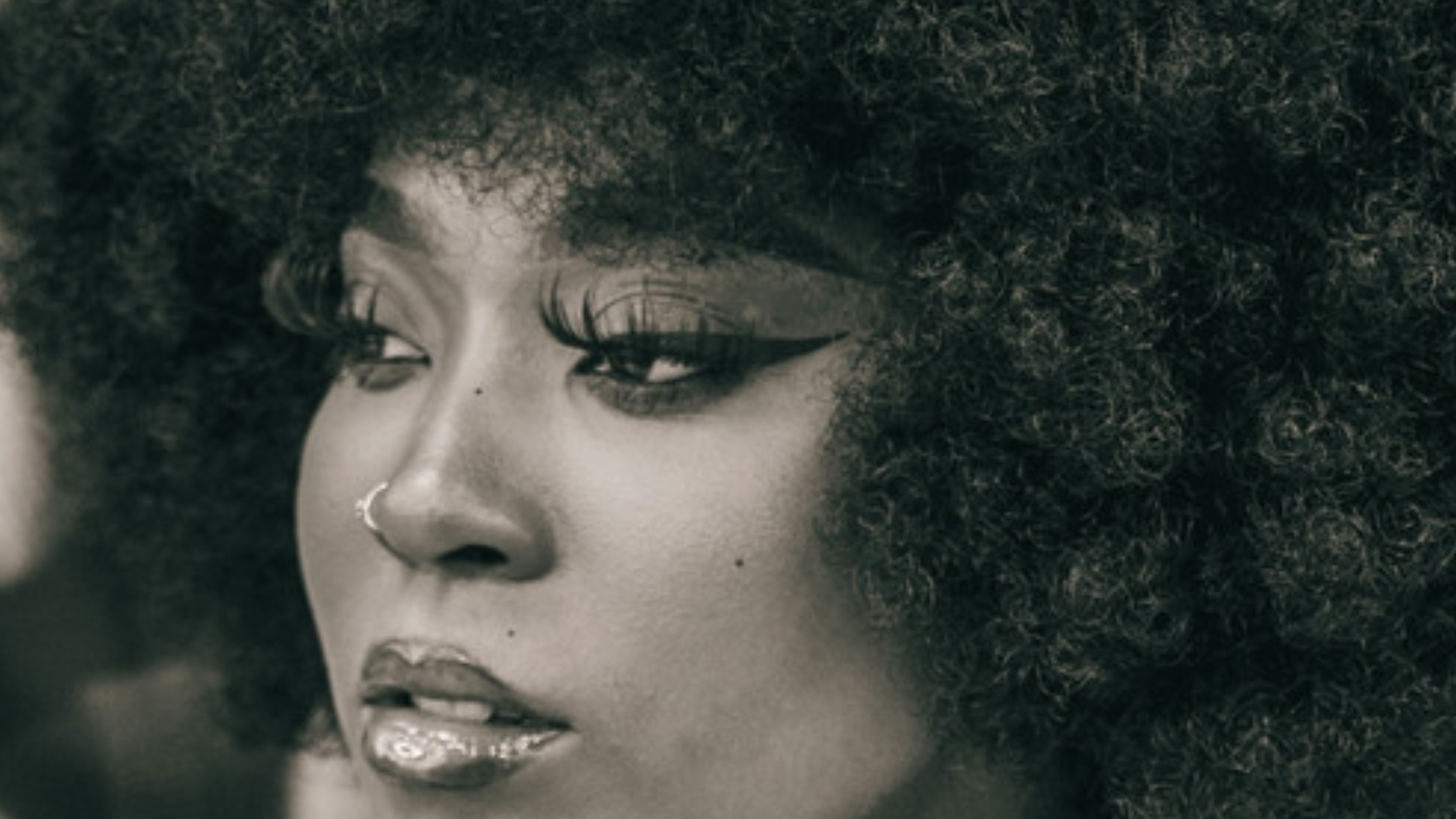
In the landscape of contemporary British R&B, few voices possess the gravitas and textural complexity of Rozzzqween. Birmingham-born, London-based, and utterly uncompromising in her artistic vision, the artist born Roslyn Mugabe has constructed a sonic universe that refuses easy categorization. Her latest single, “Mr Drummer,” represents a crystalline moment in her ongoing exploration of desire, rhythm, and the intoxicating pull of physical connection.
The Architecture of Desire
“Mr Drummer” arrives as a deceptively minimal composition that belies its emotional depth. The track’s central conceit is both playful and profound: a meditation on the seductive power of rhythm itself, embodied in the figure of a drummer whose percussive mastery becomes a metaphor for intimate persuasion. The production, stripped to its essentials, allows Rozzzqween’s voice to occupy the foreground with the kind of authority that recalls the golden age of R&B, when vocal prowess and emotional authenticity were not negotiable.
The song’s hook, “Only the bongos really know / I want the bass in my soul / Hey Mr Drummer / Are you gonna play your bongos for me?” operates on multiple registers simultaneously. On the surface, it functions as a sensual invitation, a woman’s desire articulated through the language of music itself. Beneath this, however, lies a more sophisticated commentary on the ways in which rhythm becomes a vehicle for connection, how the body responds to percussion in ways that transcend rational thought.
The Visual Dimension
Accompanied by visuals directed by Director Dzi, “Mr Drummer” extends its conceptual reach into the visual realm. The aesthetic choices made in the accompanying video reinforce the track’s central tension between minimalism and intensity, between restraint and release. Rozzzqween’s presence on screen carries the same gravitas that defines her vocal delivery, a refusal to perform femininity in any conventional sense. Instead, what emerges is a portrait of agency, of a woman who understands the power of her own desire and articulates it with precision.
Rozzzqween’s Artistic Trajectory
Since her viral breakthrough in 2019 with “Sunday Afternoon,” a track that accumulated over 450,000 streams on TikTok before she even possessed the platform’s app, Rozzzqween has demonstrated a consistent commitment to emotional authenticity and sonic sophistication.
Her 2021 EP “Damned If I Don’t” established her as an artist of considerable depth, exploring themes of trauma, resilience, and the complications of navigating romantic entanglement. Subsequent releases including “Lost 4 Wordz,” “When In Rome,” and “Tomorrow” have only deepened this trajectory, each track a carefully considered statement about the female experience in contemporary life.
What distinguishes Rozzzqween from her contemporaries is her refusal to dilute her artistic vision for commercial palatability. In interviews, she has spoken candidly about the pressures within the music industry to prioritize virality over artistry, to chase trends rather than remain true to one’s creative impulses. “Mr Drummer” stands as a testament to this commitment. It is not a song designed to dominate streaming algorithms or generate frenzied social media engagement. Rather, it is a song that trusts in the listener’s capacity for nuance, for understanding that desire can be articulated with intelligence and restraint.
The Influence of Legacy
Rozzzqween’s vocal approach has frequently drawn comparisons to Amy Winehouse and Erykah Badu, artists whose influence runs deep through her work. Yet these comparisons, while not entirely misguided, risk obscuring what is genuinely distinctive about her voice. Where Winehouse’s tone carried a certain fragility, and Badu’s voice functions as an instrument of philosophical inquiry, Rozzzqween’s raspy, powerful delivery conveys something more akin to controlled fury. It is a voice that has witnessed heartbreak and emerged not broken, but fortified.
Her musical influences extend beyond these obvious touchstones. Growing up in the late 1990s and early 2000s, she absorbed the sonic vocabulary of artists like Cee Lo Green and Ms. Dynamite, her father’s album by the latter serving as a formative introduction to the possibilities of R&B and soul music. This genealogy is audible in her work, a lineage that connects her to a tradition of British R&B that emphasizes vocal virtuosity and emotional honesty.
The Industry and Its Complications
In her interviews, Rozzzqween has been remarkably forthright about the challenges of navigating the music industry as a woman, particularly as an unrepresented woman of color. She has spoken about the various forms of exploitation that await artists, the financial precarity of streaming-era music, and the necessity of maintaining artistic agency in a landscape designed to extract and commodify creative labor.
“Mr Drummer” exists within this context. It is a song created by an artist who understands the stakes of her own work, who has made deliberate choices about what aspects of herself she is willing to expose to public scrutiny. The track’s sensuality is not offered as a commodity to be consumed, but as an expression of agency and desire on her own terms.
The Rhythmic Imperative
At its core, “Mr Drummer” is about rhythm as a form of communication, as a language that bypasses the rational mind and speaks directly to the body, the track’s production, while minimal, is meticulously calibrated to create this effect.
The bongos that feature so prominently in the song’s hook are not merely decorative; they are the song’s emotional center, the rhythmic pulse around which everything else orbits. When Rozzzqween asks “Are you gonna play your bongos for me?” she is asking not merely for musical accompaniment, but for a kind of rhythmic communion, a meeting of bodies through the medium of percussion.
Looking Forward
What remains clear is that Rozzzqween is not interested in the shortcuts to success that the contemporary music industry offers. She is not chasing viral moments or attempting to engineer TikTok trends. Instead, she is engaged in the slower, more difficult work of building a body of music that will endure, that will continue to resonate with listeners years from now. “Mr Drummer” is a song that rewards repeated listening, that reveals new layers of meaning with each encounter.
In a musical landscape increasingly dominated by algorithmic curation and the tyranny of trend cycles, Rozzzqween’s commitment to artistic integrity feels not merely refreshing, but necessary. “Mr Drummer” stands as evidence that there remains an audience for music that trusts in the listener’s intelligence, that refuses to condescend or simplify. It is a song that asks something of its audience, and in return offers something genuine: the voice of an artist who has earned the right to speak with authority about desire, rhythm, and the complicated business of being human in the contemporary moment.